
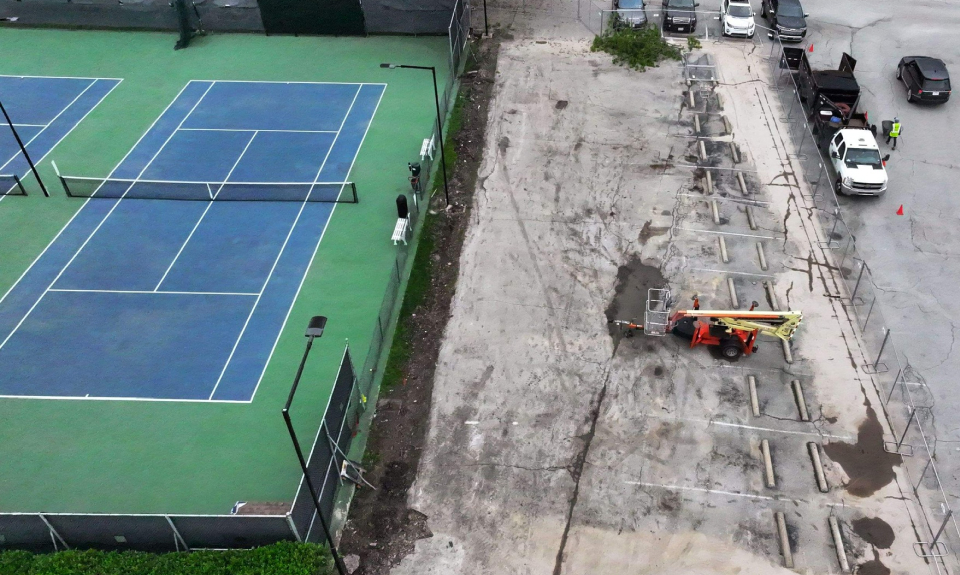
Cooper Fitness Pickleball Courts
Celebrity Courts was honored to work with one of Texas's most renowned senior fitness facilities when they were looking to build 4 pickleball courts on top of an unused portion of an asphalt parking lot.
Request a consultationPickleball Courts on Parking Lot?
After calling multiple pickleball court contractors in Dallas to bid on the project, the customer was frustrated that every contractor wanted to completely rip out the existing asphalt parking lot and create an entirely new base...a very costly option.
The team at Celebrity Courts evaluated the structural integrity of the existing asphalt parking lot and found that it would provide a very sound base on which to build the 4 pickleball courts.
Building Up vs. Digging In
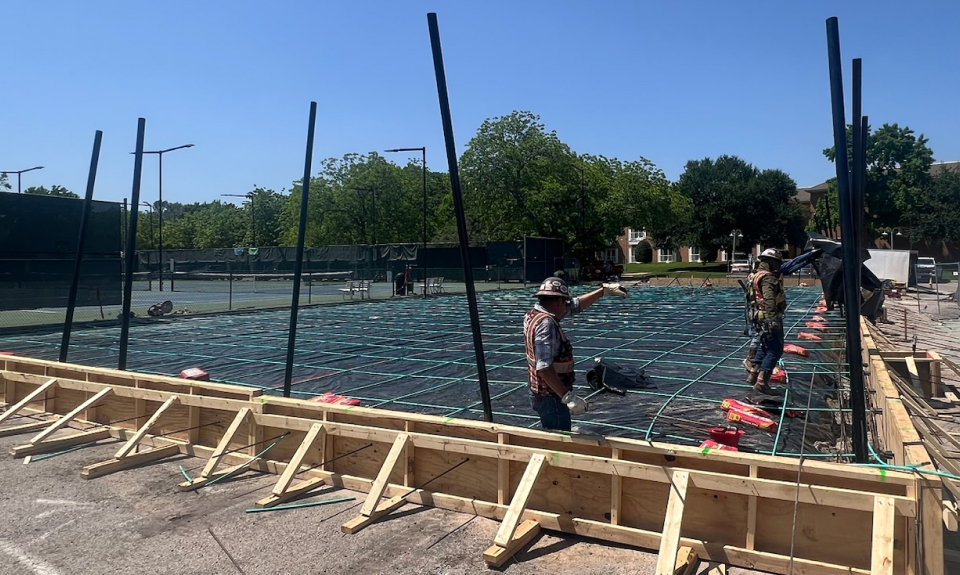
Confident that the existing asphalt parking lot provided the solid sub base required, our team constructed the concrete forms needed to pour a level base. All of the forms were custom built and designed to compensate for the gradual slope inherent in the existing parking lot.
Fast & Cost Effective
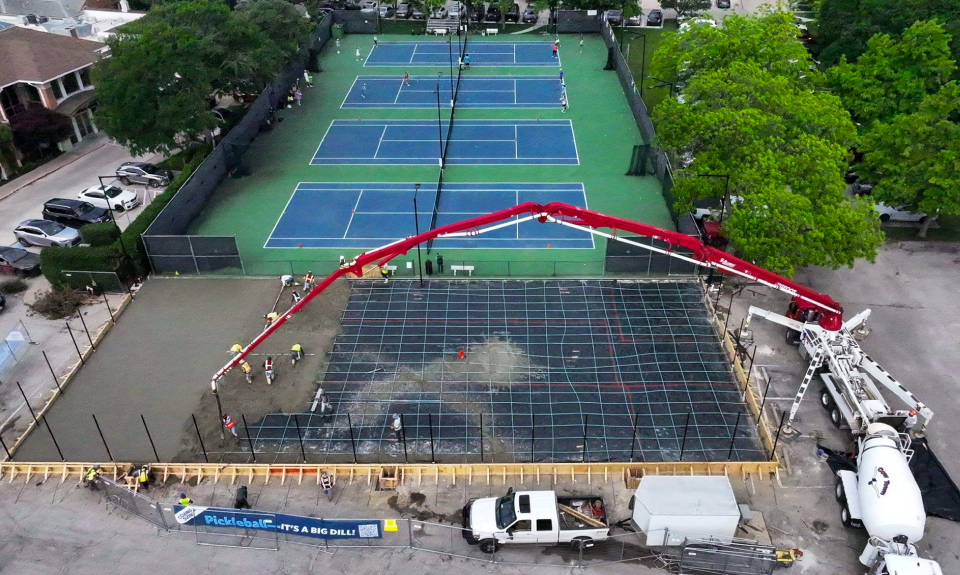
With the concrete forms and reinforcing bars in place, we were able to work with the team to get the concrete poured in a very efficient manner. The courts were built to meet industry standards for drainage, durability and performance.
The entire project was completed relatively quickly and cost effectively...minimizing disruption at the facility.
A High Performance Surface
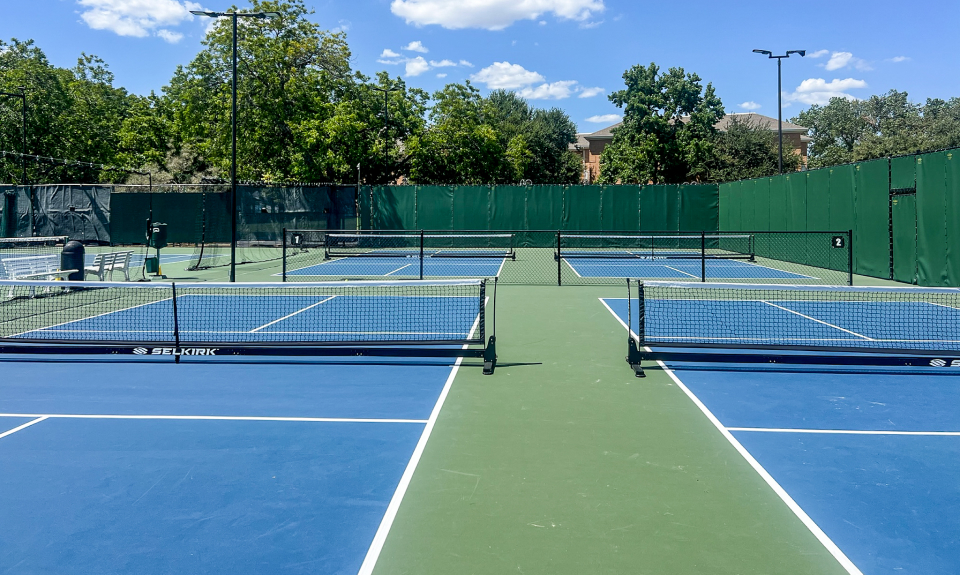
Once the concrete was in place and cured, the Celebrity Courts team applied the PickleMaster court surfacing system from SportMaster. This specialty court coating features a specialized aggregate blend to provide a safe, non-slip playing surface and non-aggressive texture for minimal pickleball wear.
Why Parking-Lot Pickleball Conversions Are Different
Parking-lot conversions succeed when the existing asphalt or concrete is evaluated like infrastructure, not treated like a blank canvas. Existing parking areas come with inherited slopes, drainage patterns, striping history, patchwork repairs, curb transitions, and circulation issues that a new-build court does not have to solve. That is why Celebrity Courts treats a retrofit like a site-repositioning exercise rather than a simple resurfacing job.
When a property owner studies a parking-lot conversion, the first real question is whether the existing hardscape is a usable asset or a liability. The answer determines everything that follows, from repair scope and overlay decisions to how fencing, net locations, and pedestrian circulation can be installed without turning the rest of the property into a conflict zone.
Site Evaluation Before Layout
Celebrity Courts starts by reading the parking area as infrastructure. We look at slope, low spots, drainage discharge, existing cracks or patching, curb conditions, and the way people already move through the site. If the surface has to support competitive pickleball, then every one of those details matters because players will notice dead spots, standing water, or uneven bounce immediately.
- substrate condition and slope
- water movement and low spots
- pedestrian and vehicle separation
- fencing, lighting, and circulation
Design, Construction, and User Experience
Once the existing substrate is understood, the design can focus on how many courts belong on the site, how players will queue and circulate, where fencing and gates should go, and how lighting or branding can support the experience. Retrofits often succeed because they activate underused square footage, but the best ones still feel spacious, legible, and easy to operate for staff and players.
- hard-court resurfacing systems
- net packages and fencing
- color striping and branding
- spectator and queue management accessories
Lessons This Case Study Highlights
Retrofit work is usually less forgiving than new construction because the project inherits every weakness in the existing surface and has to solve around them. The lesson is that underused hardscape can become highly functional recreation space, but only if the project respects what the existing pavement can and cannot do. Facility managers who skip that step usually end up paying twice: once for the rushed conversion and again to fix the issues that were visible from the start.
That is why Celebrity Courts uses case studies like this one as planning tools. They help property owners compare retrofit work against new construction, understand where engineering and circulation decisions matter most, and move into the next conversation with clearer expectations about cost, scope, and long-term performance.
Operational Value Beyond the Court Layout
One reason this type of project matters is that it changes the business logic of the site as well as the physical layout. A dead or lightly used parking area does not create much energy for a club, campus, or community property. A well-planned pickleball conversion can create visible activity, give members or guests a reason to stay longer, and turn overlooked pavement into something people actually talk about. That lift only happens, however, when the finished courts feel intentional enough that users trust the surface, understand where to move, and can circulate around the amenity without friction.
That is also why retrofit projects deserve a more serious planning conversation than they often receive. The owner needs to decide how the courts should support scheduling, social play, lessons, events, or general site activation. The construction team then needs to translate those goals into fencing, gate locations, queueing zones, spectator edges, drainage corrections, and surface detailing that support the experience instead of fighting it. When those operational choices are made early, a parking-lot conversion can feel like a strategic improvement rather than a clever stopgap.